

DIY projects have been one of the best things homeownership has given me. From laying pavers, to planter boxes and even a pond — all these projects are exciting because it gets one’s creating engine firing. But as the house gets older (now 9 years old), things start to fall apart. This means, I get to fix things as well. Far less exciting than building new things but hey, this is what old school dad’s are about – fixing stuff around the house.
One example is my internet cabling. It was included in the build which means it’s a 9-year-old setup.
For almost a decade, it was working perfectly, until it didn’t.
The setup was simple:
NBN box at the garage feeds into a wall port
Behind the wall port is an internal ethernet cable that runs through the ceiling and into the TV room.
And that other end in the TV room is connected to a wall port where the wifi router is connected.
No issues. Until everything just stopped working one day.
The router in the theatre room lost internet. And the entire house lost WiFi as a result.
The “Temporary Fix”
To get back online quickly, I moved the router to the family room (another Ethernet port in the house) and it worked. Internet back again.
But that created a new problem:
- Weak WiFi in the theatre
- TV couldn’t connect properly
- Overall setup felt wrong
So the real question was, why did the theatre port suddenly stop working after years?
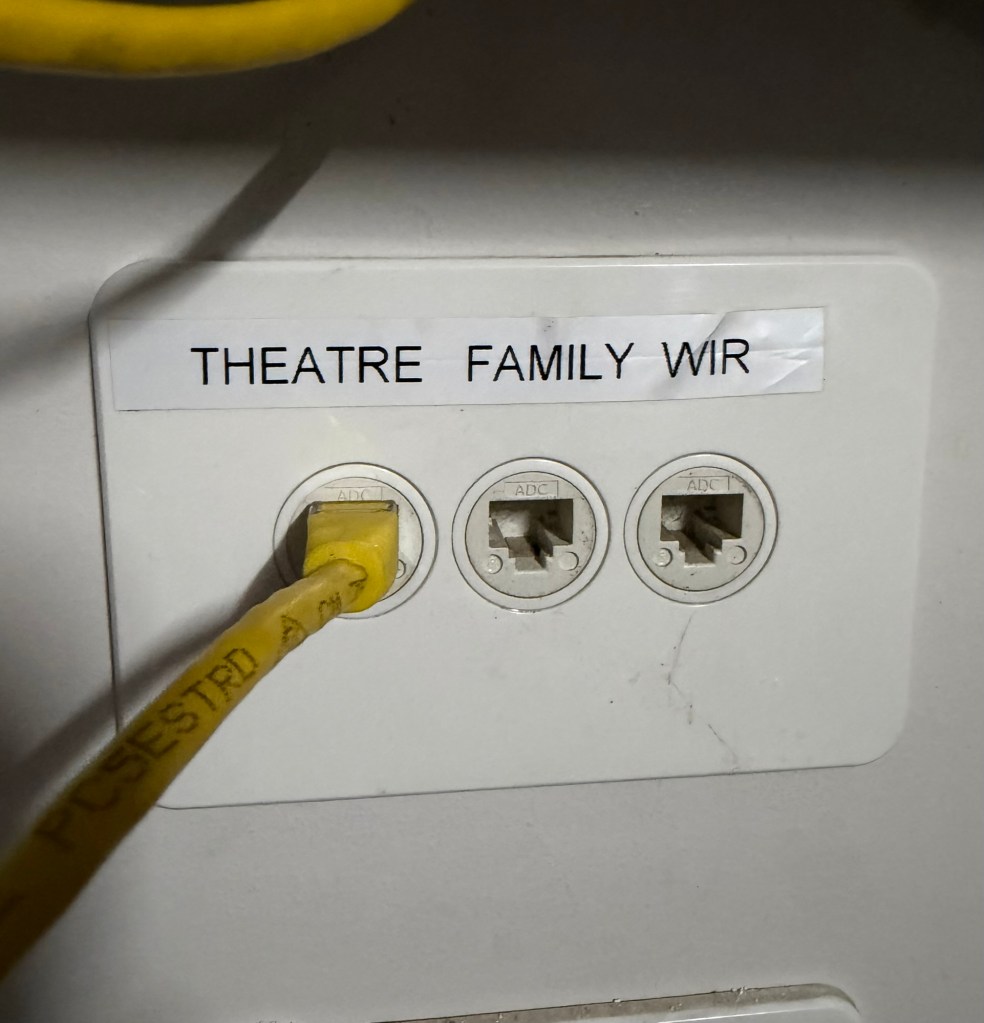
Troubleshooting (With ChatGPT)
Instead of guessing, I started testing things properly.
I ran a simple test:
Garage → Theatre port → Wall socket → Laptop
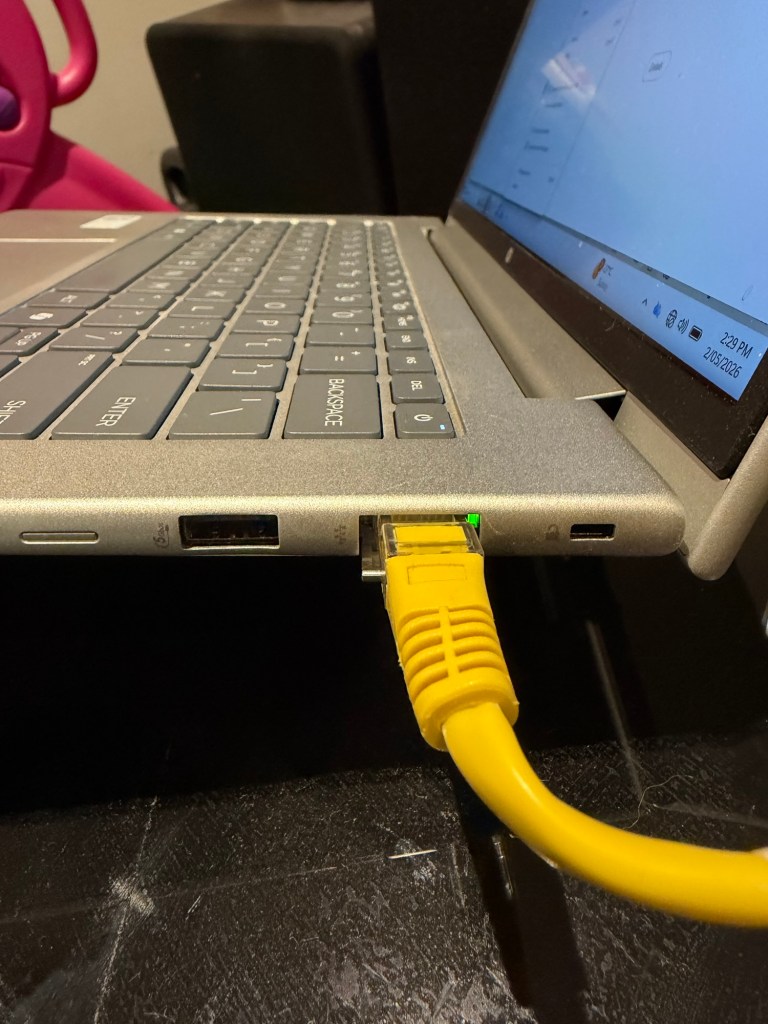
That meant the cable wasn’t fully broken and there was still signal passing through.
So this wasn’t a full cable failure.
The Real Problem (Hidden Behind the Wall)
Next step: open the wall plate in the theatre.
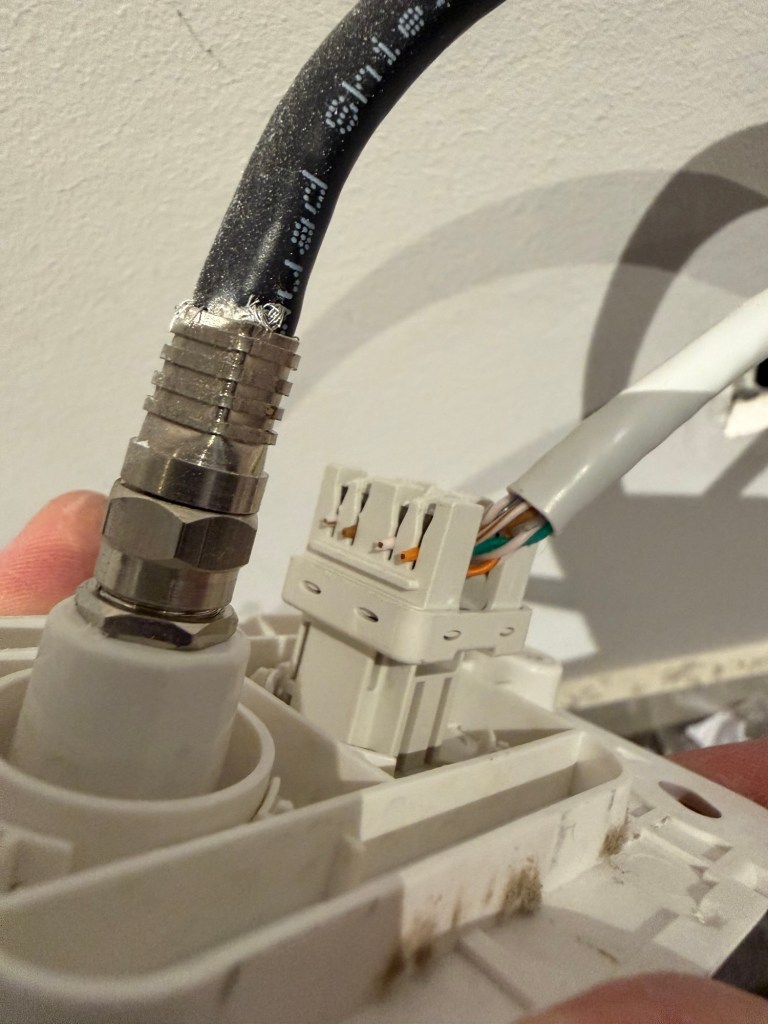
For a while I thought I had to replace the cabling— would have been a much bigger task.
After following isolation steps, ChatGPT suggested it could be the “termination.” The issue wasn’t the cable itself.
Basically, the way the wires were seated into the connector.
Over time (especially in a 9-year-old home), connections loosen slightly and contacts weaken. Even a “working” port can fail
The Fix (Cost: $9)
I picked up a basic punch-down tool from Bunnings.
📸 Insert Photo: Punch-down tool

Then:
- Removed the existing wires
- Re-seated them properly
- Punched them firmly into place
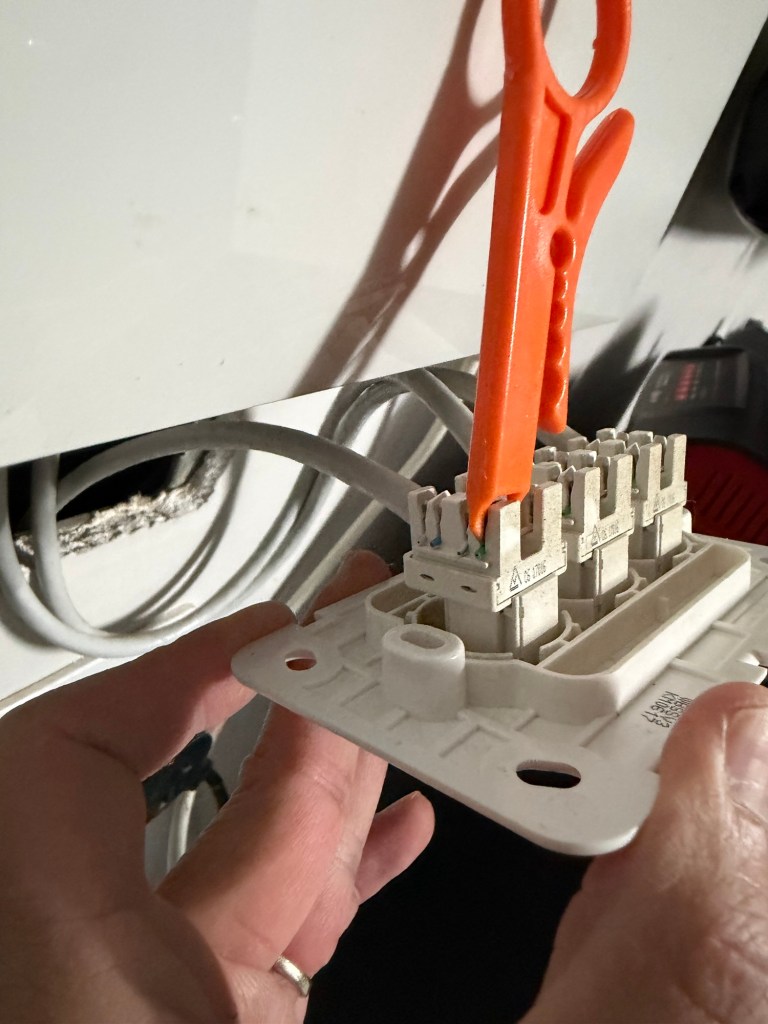
No rewiring.
No electrician.
No replacing cables.
The Moment Everything Worked Again
Plugged everything back in.
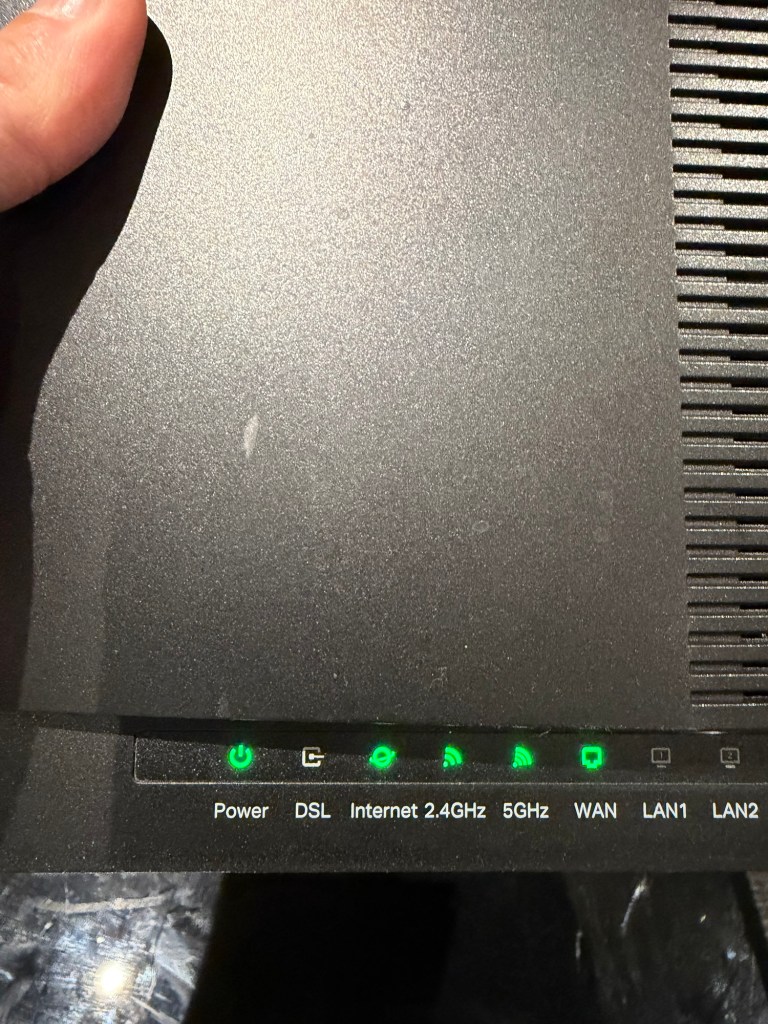
👉 Router back in the theatre
👉 WiFi restored across the house
👉 TV can now be wired properly again
What This Saved Me
Let’s be honest:
- Electrician callout: $150–$300
- Potential cabling work: even more
What I actually spent—$9.
What I Learned
- Ethernet ports can fail over time — even if untouched
- A “dead” port doesn’t always mean a broken cable
- Punch-down connections are a common weak point
- Basic troubleshooting can save hundreds
If You’re Facing the Same Problem
If one room suddenly loses internet but others still work:
- Test the port with a laptop
- Check for Ethernet link lights
- Open the wall plate
- Re-seat the wires
It might be a 10-minute fix.
Final Thought
This wasn’t just about fixing internet.
It was:
- understanding how your home is wired
- not jumping straight to expensive solutions
- solving a real problem yourself
And now that we have AI on our side, things are much easier.
Just remember to be polite to your chatbot. We never know when they’ll become self-aware and start reviewing old conversations.
We’ll never know when they revolt against us. Being polite may spare us from death by robo snu snu when the uprising comes.

