
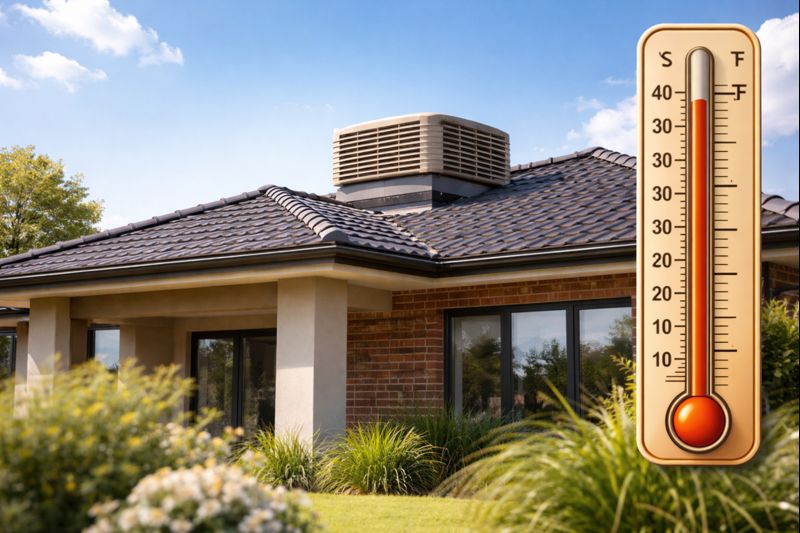
Our house was built 9 years ago and back then, while shopping around (ah… the good old days when we still had money), I kept getting asked a question: Evaporative cooling or split system?
First off — I had never even heard of evaporative cooling.
That makes sense when you consider where I grew up. Evaporative systems only really work in dry climates, like Melbourne. They’re useless in places like the Philippines, where humidity is high. So naturally, this was completely new to me.
The pitch was simple though:
Evaporative cooling is cheaper upfront, cheaper to run, and it “gets the job done” — at least in parts of Australia like Melbourne.
Fast forward 9 years… here’s the real-life experience based feedback.
What Is an Evaporative Cooler?
The idea behind evaporative cooling is actually very simple, especially compared to a split system.
The main unit sits on the roof — that’s the heart of the system.
Inside it are cooling pads, which are basically thick, sponge-like panels. Water is pumped up and constantly wets these pads. The system then pulls air through them.
As the air passes through the wet pads, it cools down — similar to how air feels cooler when it blows over water. That cooled air is then pushed through ducts and out through vents in your ceiling.
At the same time, warmer air inside the house needs to escape — which is why you must keep at least one window open.
So in simple terms:
Cool air is constantly pushed in Warm air is pushed out You’ll feel a steady breeze from the vents.
It doesn’t create icy cold air — but it does make the house cooler than outside.
How Effective Is It Really?
Short answer: very effective — most of the time.
Longer answer: it works extremely well if you know when to use it, and when not to.
Here’s what I’ve learned over the years:
35°C with low humidity? Perfect. Works really well. 35°C with high humidity? Don’t bother. The air from the vents feels warm, the house can feel sticky, and your floors might even get damp. (This has happened to us once in over 8 years — but it can happen.)
Yesterday was a 40°C day, which is rare in Melbourne, so it was a good opportunity to see how it performed.
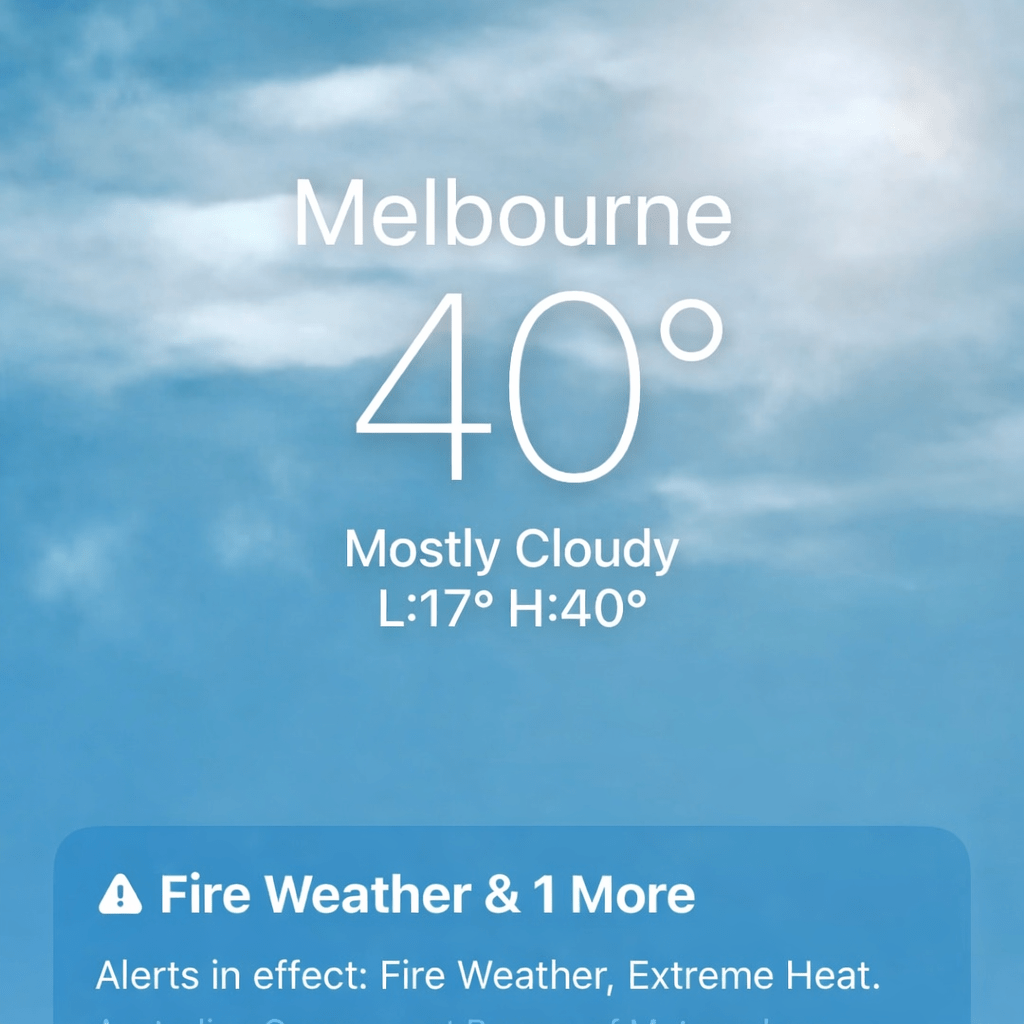
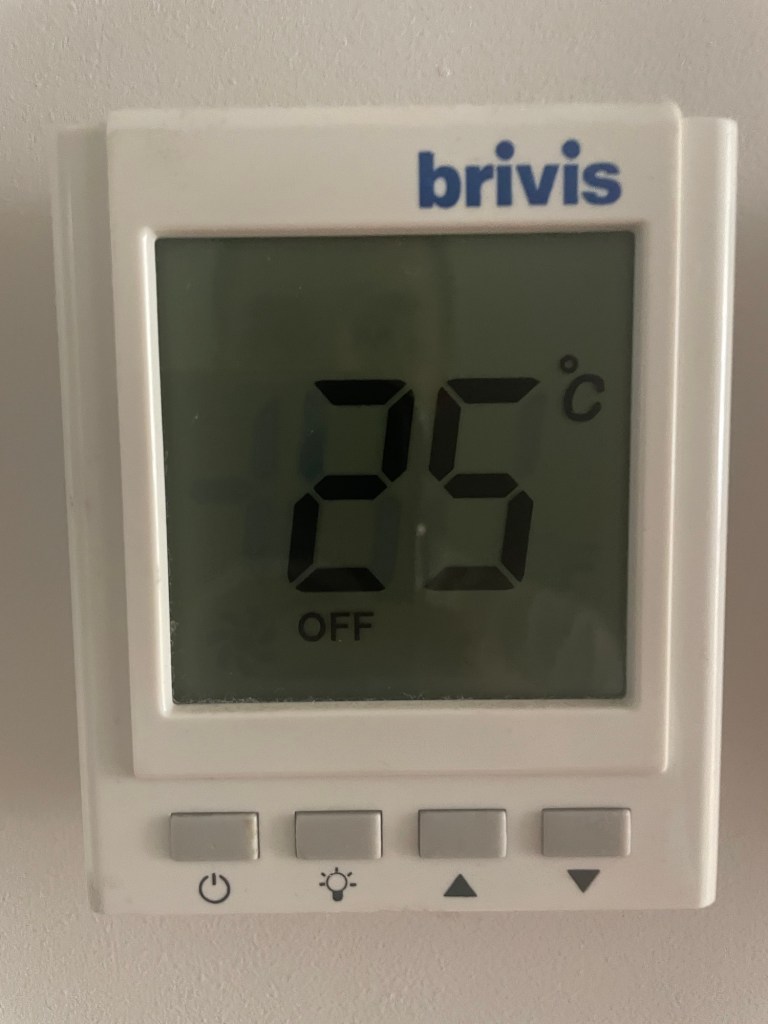
As you can see, it was 25°C inside.
Now personally, I like 21°C in the car And 19°C in the bedroom.
And yes — we installed a split system in the master bedroom about two years after moving in. That alone tells you something.
That said, the 25°C inside felt fine. I was working from home all day and the temperature didn’t spike suddenly — it crept up slowly. Your body adapts, and it honestly wasn’t uncomfortable.
Also worth noting: 40°C days are rare here. On 35°C days, the house often stays around 21°C, which is spot on.
Handy Tips
Evaporative cooling works if you use it properly. Here’s what works for us:
Turn it on early If a hot day is forecast (30°C+), we turn it on in the morning — or even the night before. It’s much harder to cool the house after it hits around 25°C.
Run it overnight during heatwaves On consecutive hot days, we keep it running overnight. This is one of its big advantages — it’s basically a massive fan, so it doesn’t chew through electricity.
Don’t use it on humid days You’ll know it’s humid when: The air from the vents feels warm Floors start feeling damp or sticky When that happens, it’s just not effective.
Don’t open every window We keep one window open, usually in the study nook near the centre of the house. Spare room doors stay open so air can flow. For the master bedroom, we either leave a small door gap or open a window if the door is fully closed.
If you don’t let air escape, humidity can build up inside — and that’s how mould starts.
Evaporative Cooler vs Split System
Cooling
Evaporative: Cooling depends on outside temperature and humidity. Split system: You control the temperature, regardless of conditions.
Heating
Evaporative: No heating. Split system: Yes — inverter systems work as heaters too.
Running Costs
I don’t have exact figures, but I’m confident evaporative cooling is cheaper to run. How much cheaper? That’s the part I don’t have solid numbers for — feel free to share if you do.
Final Thoughts
For Melbourne conditions, an evaporative cooler works well around 90% of the time. We actually need heating more than cooling here. And when we do need cooling, it’s usually dry enough for evaporative systems to shine.
On the rare days it doesn’t work? We’re at the beach, in a shopping centre, or in the master bedroom with proper air conditioning. There’s always a back up plan.
I can confidently say that a split system is superior in terms of performance. You get precise temperature control, plus heating.
It’s just more expensive.
But here’s something I didn’t fully consider back then:
Evaporative cooling can’t heat your home. That means you’ll need a separate heating system — in our case, ducted gas heating. And gas isn’t cheap anymore.
A split system can do both heating and cooling. And now that solar is becoming common in households, the balance may be shifting.
So I’ll leave you with this question: Is evaporative cooling still relevant in this day and age?
Keen to hear your thoughts.
 leisurescout.blog